


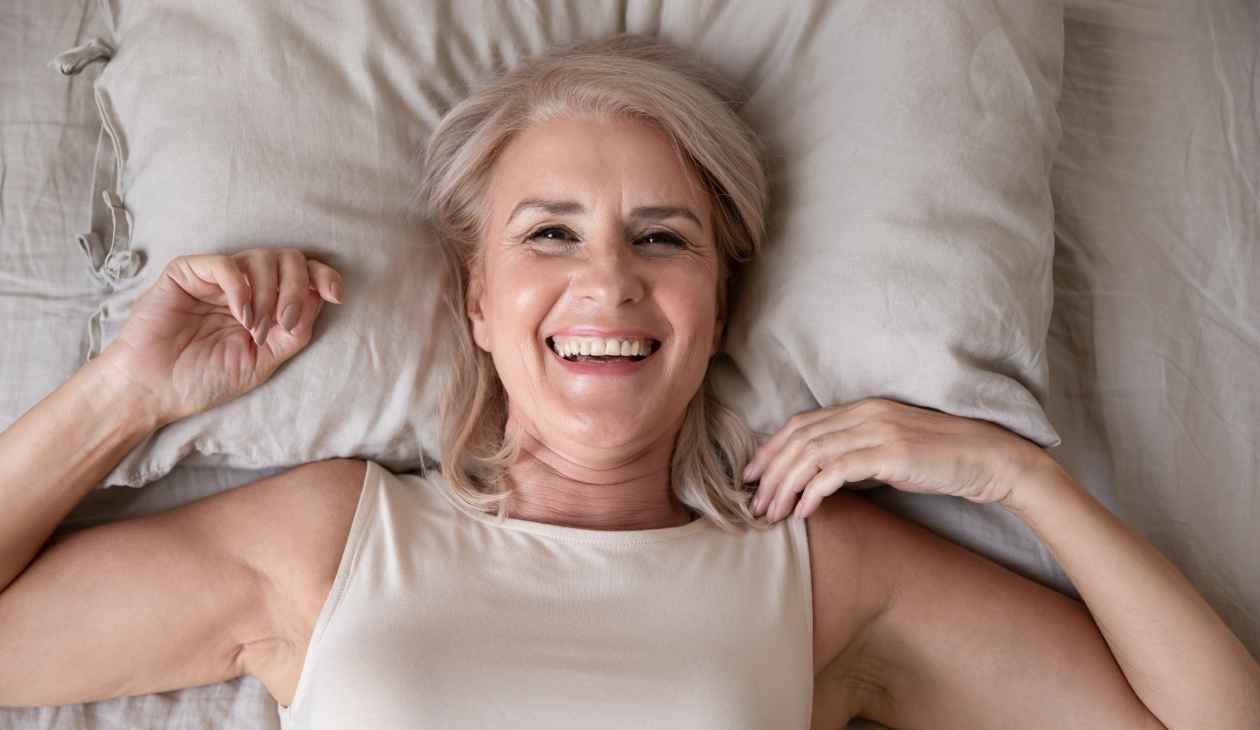


If you are in your 40s or 50s and find yourself wide awake at 3 am, replaying the day in your mind, you are not alone.Around half of women in the menopause transition report poor sleep or a sleep disorder. The good news is that that there are evidence-based ways to improve menopause-related sleep problems.
Once you understand what is happening in your body, you can use targeted strategies - including evidence-based self-hypnosis - to calm the nervous system and improve sleep quality over time.
Why Menopause Affects your Sleep so Much
Hormones, hot flashes, and midnight awakenings
During perimenopause and after the final period, levels of oestrogen and progesterone fluctuate and then gradually fall. These hormones influence the brain's sleep centres and the system that regulates body temperature, which is why hot flashes and night sweats are so common.
Night sweats can jolt you awake multiple times, leaving you hot, damp, and anxious about whether you will get back to sleep. Over time, your brain can start to associate bedtime with frustration and dread rather than rest.
Mood, Anxiety, and the "Tired but Wired" Feeling
Midlife brings new stresses: ageing parents, work pressure, teenagers, financial responsibilities. These factors, combined with hormonal shifts, increase the risk of anxiety and low mood, both of which make it harder to fall and stay asleep.
Insomnia and mood feed into each other: poor sleep worsens anxiety and irritability, and higher daytime stress makes it harder to switch off at night.
Ageing and your Body Clock
As we age, our internal body clock tends to shift earlier, and the natural sleep drive can become weaker. Evening screen time, late meals, and caffeine can push the body in the opposite direction, leaving the nervous system "on" when we want it to be "off".
Put together, these changes explain why menopause insomnia is extremely common but not a character flaw or lack of willpower.
What exactly is self-hypnosis?
Self-hypnosis is a structured mind-body technique that combines focused attention, guided imagery, and positive suggestions while you are in a relaxed, absorbed state.
It is different from stage hypnosis. In clinical and self-hypnosis:
- You remain aware and in control.
- You can choose to stop at any time.
- The goal is to help your brain and body shift from "fight-or-flight" into a calmer "rest-and-digest" mode.
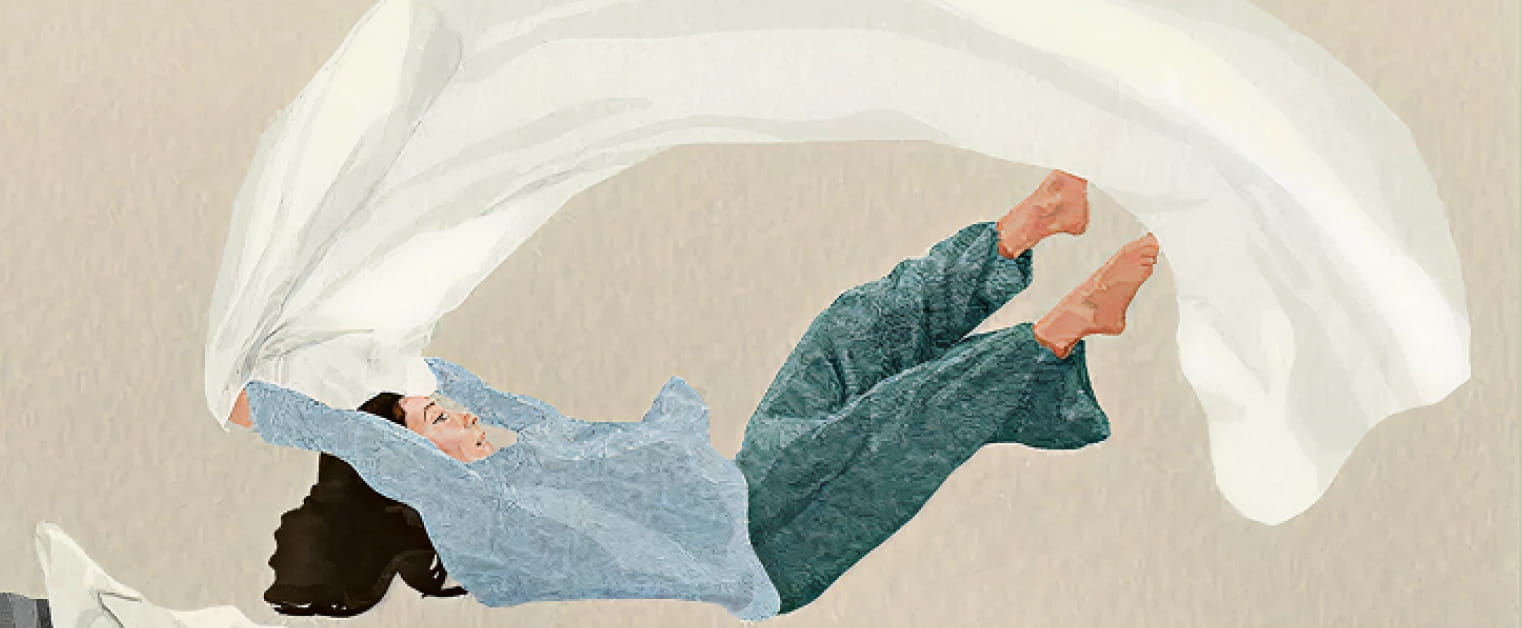
During self-hypnosis, people typically focus on their breathing, follow a script or audio, and imagine soothing images -- such as lying safely on a quiet beach. In this state, the brain becomes more receptive to helpful suggestions like, "I fall asleep more easily and drift back to sleep more quickly when I wake in the night."
Over repeated practice, these suggestions can strengthen new patterns: less hyper-arousal at night, more confidence in your ability to sleep, and fewer hours lost to clock-watching.
The Evidence: how Self-Hypnosis Helps Menopause Sleep
Randomised Trial in Postmenopausal Women
A key randomised controlled trial looked at 90 postmenopausal women with poor sleep. Participants were assigned to one of four versions of a hypnosis programme (3 or 5 sessions, delivered either in person or by phone). All received structured sessions and used hypnosis audio recordings at home every day for five weeks.
Results showed:
- High satisfaction and good adherence to daily home practice.
- Clinically meaningful improvements in sleep quality in all groups, with a large effect size.
- No meaningful difference between phone and in-person delivery - phone-based delivery showed similar results to in-person sessions
Self-Hypnosis for Hot Flashes and Night Sweats
Hot flashes and night sweats are among the biggest disruptors of menopause sleep. In a randomised trial of 187 postmenopausal women, five weekly sessions of clinical hypnosis led to about a 74% reduction in hot flashes at 12 weeks, versus 17% in the control group.
More recently, a self-guided hypnosis audio programme tested in a JAMA Network Open trial produced over 50% reduction in hot flash frequency and intensity after six weeks, with benefits growing to around 60% reduction at three-month follow-up. Self-administered hypnosis produced significantly greater reductions inhot flash frequency and severity compared with an active control condition. Fewer hot flashes at night mean fewer awakenings and more consolidated sleep.
Community and international data
In an Indonesian study of menopausal women with insomnia, an audio-based self-hypnosis programme used daily for two weeks produced a statistically significant reduction in sleep-disturbance scores compared with a control group.
Across these trials, self-hypnosis consistently shows:
- Better overall sleep quality on standard questionnaires.
- Less time awake in the middle of the night.
- High satisfaction and willingness to continue practice.
How to Use Self-Hypnosis for Better Sleep
You do not need special equipment to begin. A typical self-hypnosis routine can be adapted to your culture, language, and daily schedule.
1. Choose your time and place
- Aim for 15 to 20 minutes, ideally in the evening or after you get into bed.
- Aim for 15 to 20 minutes, ideally in the evening or after you get into bed.
- Choose a quiet place where you can sit or lie comfortably without being disturbed.
- Use headphones if you share a room or have a noisy household.
2. Start with your breath
Spend a few minutes simply slowing and smoothing your breathing:
- Inhale gently through the nose for a count of 4.
- Pause briefly.
- Exhale slowly for a count of 6.
Even this alone sends a signal to your nervous system that it is safe to relax.
3. Enter a focused, relaxed state
You can use:
- A guidance audio from a clinician or evidence-based programme, or
- A script learned in sessions, reading or recalling it before closing your eyes.
Common elements include gradual relaxation of each part of the body, imagery of a safe peaceful place, and a sense of going deeper into relaxation with each breath.
4. Add sleep-supportive suggestions
When you feel calm and absorbed, bring in short, positive phrases such as:
- "My mind knows how to settle and drift."
- "If I wake in the night, I feel calm and fall back to sleep more easily."
- "My body is learning to feel safe and at rest in the dark."
In clinical studies, women were encouraged to practise daily for several weeks, which appears to be important for building and maintaining benefits.
5. Think in weeks, not nights
Self-hypnosis is a skill, not a switch. Most trials saw meaningful change after 4 to 8 weeks of regular practice, not after one or two nights. It can help to think of this as "training your nervous system" rather than "fixing sleep overnight." Like meditation or physical training, self-hypnosis works through repetition and nervous-system conditioning
Other Natural Sleep Strategies that Work Well with Self-Hypnosis
Light, routine, and environment
- Consistent wake-up time -- even on weekends, to reset your internal body clock.
- Morning daylight exposure -- helps strengthen your circadian rhythm.
- Cool, dark, quiet bedroom -- layered bedding and breathable fabrics help with night sweats.
What to limit
- Caffeine after early afternoon and nicotine close to bedtime.
- Heavy meals and high-sugar snacks late at night.
- Alcohol as a 'night-cap' -- it may help you fall asleep but fragments the second half of the night and can worsen hot flashes.
When other treatments may be needed
Cognitive behavioural therapy for insomnia (CBT-I) is a gold-standard treatment for chronic insomnia and can be combined with hypnosis. If hot flashes and night sweats are severe, your doctor may discuss menopausal hormone therapy (MHT) or non-hormonal medicines.
Self-hypnosis can sit alongside other options as a non-drug, self-directed tool that women can continue to use long after formal treatment ends.
How Does Self-Hypnosis Work?
When to See your Doctor about Menopause Sleep Problems
While occasional bad nights are normal, you should talk to your GP or sleep specialist if:
- You have difficulty falling or staying asleep at least three nights per week for three months or more.
- Your partner notices loud snoring, gasping, or pauses in breathing -- possible obstructive sleep apnoea.
- You wake unrefreshed with morning headaches or severe daytime sleepiness.
- You experience significant low mood, loss of interest, or panic symptoms.
Self-hypnosis is generally safe, but it should not replace medical assessment for sleep apnoea, depression, anxiety, or other health conditions. Think of it as one part of a comprehensive, personalised plan. Women with significant trauma histories, severe anxiety, or complex psychiatric conditions may benefit from guided support rather than self-directed hypnosis alone. In addition, women with significant trauma histories, severe anxiety, or complex psychiatric conditions may benefit from guided support rather than self-directed hypnosis alone.
Frequently Asked Questions


Mind-Body Support for Better Sleep



.svg)
EverCalm only uses high-quality sources, including peer-reviewed articles, to support the facts within our articles. Experts review all our articles to ensure our content is accurate, helpful, and trustworthy.
Global prevalence of sleep disorders during menopause: about half of women report sleep problems. Study.
Meta-analysis confirming highrates of poor sleep quality during menopause. Paper
Baker FC et al. Sleep disordersin midlife women and menopause: mechanisms and clinical management. Paper.
Elkins GR et al. Hypnosis Intervention for Sleep Disturbance in Postmenopausal Women. Study.
Otte JL et al. Self-Hypnosis forSleep Disturbances in Menopausal Women -- programme overview and rationale.