




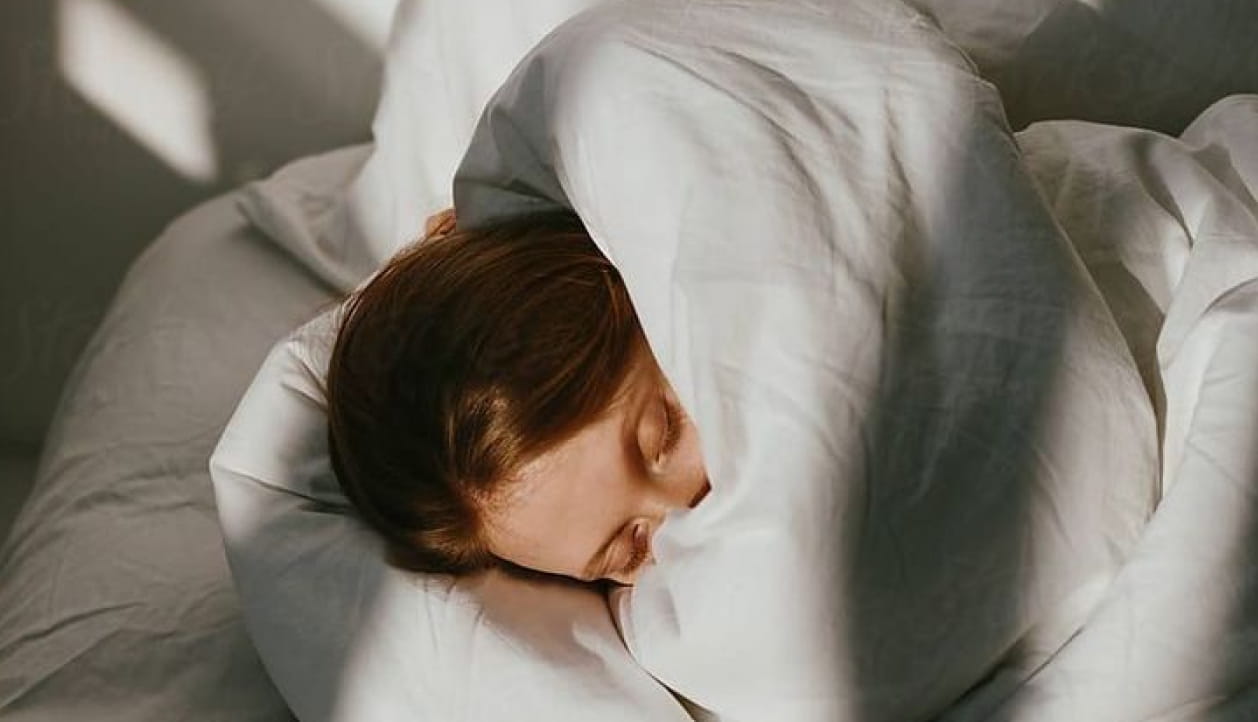
If you used to sleep well and now find yourself wide awake at 3am, staring at the ceiling and wondering what changed, perimenopause is very likely part of the answer. You are not imagining it, and you are certainly not alone. Sleep problems are one of the most common experiences of the menopause transition, affecting around half of women, and for many they arrive earlier and hit harder than expected.
The reassuring part is that this has clear, understandable causes rooted in shifting hormones, and once you understand what is happening, the steps that help start to make a lot more sense.
Is it normal to sleep badly during perimenopause?
Yes. Disrupted sleep is one of the defining symptoms of perimenopause, the years leading up to your final period. Perimenopause affects an estimated 80 to 90% of women, and the onset or worsening of sleep problems is one of its most frequent features. Research that pooled data from dozens of studies found that sleep disorders affect around half of women through the menopause transition, a rate well above what normal aging alone would predict.
In other words, if your sleep has fallen apart in your forties or early fifties, hormones are a far more likely explanation than simply “getting older.”
Why can't I sleep during perimenopause?
The short answer is that the hormones which quietly supported your sleep for decades are now fluctuating and declining, and several of them had jobs you never noticed until they stopped doing them. Three shifts matter most.
Progesterone: your natural sleep hormone is fading
Progesterone is often the first hormone to decline in perimenopause, frequently before oestrogen drops in earnest. That matters for sleep more than most women realise. In the body, progesterone is converted into a substance called allopregnanolone, which acts on GABA receptors in the brain. GABA is the brain's main calming signal, the same system that sedative medications target. Allopregnanolone is, in effect, one of your body's own built-in sleep aids.
As progesterone falls, you lose some of that natural sedating effect. Sleep becomes lighter and more easily broken, and it can become harder to drift back off after waking. Because progesterone often declines early, this is one reason sleep can deteriorate in perimenopause even before hot flashes or night sweats have begun.
Oestrogen, temperature, and the 3am wake-up
Oestrogen helps regulate the brain's internal thermostat in the hypothalamus. As oestrogen becomes erratic and then declines, it raises levels of norepinephrine and, through a signalling system involving neurokinin B, narrows the range of temperatures your body treats as comfortable. Even a small rise in core temperature can now tip you over the edge into a hot flash or night sweat.
At night, this is what pulls you out of sleep. A surge of heat, a racing heart, damp sheets, and suddenly you are wide awake. Core body temperature also naturally dips and rises across the night, which is part of why so many women describe waking at a similar time in the small hours. The 3am wake-up is not random. It reflects a real, measurable change in how your body manages temperature and arousal during sleep.
Hot flashes and night sweats fragment your sleep
Night sweats are simply hot flashes that happen while you are asleep, and they are a major driver of broken nights. A flash can wake you fully or just nudge you into a lighter stage of sleep you do not consciously remember, leaving you unrefreshed the next day without knowing quite why.
It is worth being honest about the science here: hot flashes explain some, but not all, of the sleep disruption in perimenopause. Many women wake without any flash at all, which points back to the hormonal changes in the brain's sleep and temperature systems described above. Poor sleep in perimenopause usually has more than one cause working at once.
Why does perimenopause sleep feel worse than ordinary tiredness?
Because it tends to feed a cycle. A broken night raises stress hormones and lowers your resilience the next day, which can make anxiety and low mood worse. Higher stress and anxiety then make the following night's sleep harder still, and heightened arousal can even make hot flashes more likely. Sleep, mood, and temperature are all tangled together, so a rough patch can quickly feel like a downward spiral rather than a single bad night.
Understanding this loop is genuinely useful, because it means there are several places to break into it. You do not have to fix everything at once to feel a meaningful difference.
What are the warning signs to see a doctor about?
Most perimenopausal sleep disruption is a normal, if unwelcome, part of the transition. Even so, it is worth speaking with a clinician if:
- Your sleep problems are severe, persistent, or getting steadily worse
- You feel low, hopeless, or persistently anxious alongside the poor sleep
- You snore heavily, gasp, or stop breathing in your sleep, or a partner has noticed this, which can point to sleep apnoea rather than menopause
- Daytime sleepiness is affecting your safety, such as when driving
- Restless, crawling sensations in your legs regularly keep you awake
These are worth checking because sleep problems in midlife are not always caused by menopause alone, and some have specific, effective treatments.

What actually helps perimenopause sleep?
There is no single fix, but there is a real range of things that help, and most women do best combining a few of them.
Foundations that steady your sleep
Start with the habits that stabilise the systems perimenopause is disrupting. Keep consistent sleep and wake times, even at weekends, to support your body clock. Keep the bedroom cool and use breathable, layered bedding so a night sweat is less likely to fully wake you. Get natural daylight during the day and dim the lights in the evening. Take an honest look at caffeine and alcohol, both of which fragment sleep and can amplify hot flashes, especially in the second half of the day.
Calming a wired nervous system
Because perimenopausal sleep loss is so closely tied to a nervous system tipped toward arousal, techniques that lower that arousal can be particularly helpful. Slow breathing and relaxation practices can ease the transition into sleep. One mind-body approach stands out, though, because it has been tested specifically in this group rather than borrowed from general sleep advice: self-hypnosis.
Self-hypnosis works by calming the stress response and quietening the racing, wired feeling that keeps so many perimenopausal women awake, and it has been studied specifically in menopausal women. In a study of 90 peri- and postmenopausal women with sleep problems, self-reported sleep quality improved for the large majority of participants, ranging from about 81 up to 100% depending on how the programme was delivered. The study was designed to find the most effective delivery format rather than to test hypnosis against a placebo, and one of its most practical findings was that sessions delivered by phone with guided audio for home practice worked as well as in-person sessions, which shows self-guided audio is a genuinely effective way to use it. A larger, sham-controlled 2025 randomised trial added stronger evidence. In 250 postmenopausal women, a self-administered hypnosis programme reduced hot flashes significantly more than a placebo, and among its secondary outcomes, women also reported greater improvements in sleep, mood, and concentration than the control group. It is drug-free, has no significant side effects, and can be practised at home as part of a nightly wind-down, which makes it one of the more practical evidence-based options available.
Medical options worth discussing
For some women, hormone therapy can improve sleep, particularly when night sweats are the main disruptor, by stabilising the hormonal swings behind them. Cognitive behavioural therapy for insomnia (CBT-I) is a highly effective, non-hormonal treatment recommended as a first-line approach for persistent insomnia. A menopause-aware clinician can help you weigh these options against your own symptoms, health history, and preferences.
Frequently Asked Questions


From the EverCalm Team



.svg)