


Quick answer: Menopause bone health matters: one in five women over 50 has osteoporosis. When estrogen levels fall during menopause, bone is broken down faster than it can be replaced, and bone loss is fastest in the three years around your final period. Most bone loss after menopause is not inevitable.
If you have been told your bones look "a little thin" on a scan, or you have not had a scan yet and you are wondering whether you should, this is a good place to start.
Bone health is one of the most important, and most overlooked, aspects of women's health after menopause. One in five women over 50 has osteoporosis, and more than half of the rest have osteopenia: both conditions where bone density has declined enough to raise fracture risk. Osteoporosis is also silent until bone fractures occur. Contrary to popular belief, it does not on its own cause joint or bone pain.
Forty percent of White American women will experience an osteoporotic fracture in their lifetime, and 17% will fracture a hip. A hip fracture is painful, and it is one of the leading causes of permanent loss of mobility and early death in older women.
But here is the reassuring part: most bone loss after menopause is not inevitable. The steps you take now, in your 30s, 40s, 50s, and early 60s, can genuinely change the bone you carry with you for the rest of your life.
What Happens to Bones During Menopause?
To understand why bones change at menopause, it helps to know that bone is living tissue. It is constantly being broken down by cells called osteoclasts and rebuilt by cells called osteoblasts. In a healthy premenopausal woman, these two processes stay in balance: old bone is removed and new bone takes its place.
Estrogen is the hormone that keeps this balance in check. It slows bone breakdown while also supporting the osteoblasts that build new bone. When estrogen levels fall during menopause, that brake is released. Osteoclasts become overactive, and bone is broken down faster than it can be replaced.
Think of bone like a bank account: estrogen helped keep deposits and withdrawals in balance. After menopause, the withdrawals start outpacing the deposits.
The SWAN study (Study of Women's Health Across the Nation), one of the largest longitudinal studies of bone health through menopause, following over 3,000 women, found in an analysis of 862 women that bone mineral density (BMD) declined at approximately 2.5% per year in the lumbar spine and 1.8% per year at the femoral neck (hip) during a three-year rapid-loss window around the final menstrual period. Over a decade, cumulative bone density loss reaches around 10%.
A full fracture risk assessment, which looks beyond a single number, gives the clearest picture.

What Does "Osteoporosis" Actually Mean?
Bone density is measured with a DXA scan (dual-energy X-ray absorptiometry, a low-radiation scan of the hip, spine and sometimes the wrist). The result is a T-score: a comparison of your bone density against the average peak density of a healthy young adult woman.
- Normal: T-score above -1.0
- Osteopenia: T-score between -1.0 and -2.5 (lower than average, not yet osteoporosis)
- Osteoporosis: T-score of -2.5 or below
Both conditions raise your fracture risk, and both are actionable at any stage.
What Are the Eight Key Risk Factors?
Understanding what accelerates bone loss puts you in the driver's seat.
- Estrogen deficiency: the primary driver of postmenopausal bone loss. Women who go through menopause before age 45 face greater lifetime bone loss because estrogen falls earlier.
- Low calcium and vitamin D intake: bones cannot remineralize without adequate calcium, and vitamin D is essential for calcium to be properly absorbed from food.
- Inactivity: bones respond to mechanical load. Sedentary women lose bone density faster than active ones.
- Low body weight (BMI < 18.5 or weight < 45 kg) is a significant risk factor for osteoporosis and fragility fractures, especially in postmenopausal women. Leaner individuals have less bone tissue to lose, and less fat padding to cushion hips during falls, roughly doubling hip fracture risk; much of this is explained by lower bone density.
- Chronic psychological stress: when the body is under sustained stress, it releases cortisol, a hormone that directly inhibits bone-building osteoblasts and accelerates bone resorption. A landmark study of 11,020 postmenopausal women from the Women's Health Initiative (WHI) found that each one-point increase in social stress was linked to 0.082% greater femoral neck (hip) bone loss, 0.108% greater total hip loss, and 0.069% greater spine bone loss over just six years.
- Smoking and excess alcohol: smoking can increase osteoclast activity; excess alcohol can impair the osteoblasts needed to build new bone.
- Medical conditions: Overactive thyroid (or over-replacement of thyroid hormone), parathyroid problems, diabetes, inflammatory conditions like rheumatoid arthritis, chronic kidney or liver disease and a number of other conditions can accelerate or even cause osteoporosis. Your doctor should run some tests to rule out these treatable conditions.
- Family history: Family history is a significant, non-preventable risk factor for osteoporosis, as bone density is strongly influenced by genetics. A parent or sibling with the condition, especially a parent who suffered a hip fracture, increases your risk. Research indicates that up to 80% of bone density is genetic, with parental hip fracture history being particularly relevant. This figure describes differences between people across a population; each woman's bone density still responds to diet, activity and hormones. If you have a family history of osteoporosis, attention to the other risk factors is even more important.
Why Start with Lifestyle Medicine Before Considering Additional Options?
The 2025 White Paper from the International Menopause Society (IMS), The Role of Lifestyle Medicine in Menopausal Health, is clear: lifestyle medicine is the foundation of effective menopause care. Every woman, regardless of her T-score or fracture history, should build these habits first. The North American Menopause Society (NAMS) agrees: good nutrition, regular physical activity, and avoiding smoking and excess alcohol are first-line recommendations for all postmenopausal women.
What Nutrition Supports Bone Health?
Calcium is the building block of bone. NAMS guidelines recommend a total daily intake of 1,000 to 1,200 mg for women over 50, from food first (dairy, leafy greens, canned fish with bones, tofu set with calcium, fortified plant milks), with supplements only if food alone is not enough. Dairy products are the most bioavailable source of calcium; if your diet does not include dairy, you will most likely require a supplement. As with any supplement, confirm the right dose for you with your doctor.
Vitamin D enables calcium to be absorbed. A daily intake of 400 to 800 IU is recommended; combined calcium and vitamin D supplementation has been shown in meta-analysis to reduce hip fracture risk by approximately 19%; neither nutrient achieves the same effect alone. Discuss optimal dosing with your doctor, particularly if you have limited sun exposure or darker skin tone.
For your overall dietary pattern, the IMS 2025 White Paper recommends a whole-food, plant-forward diet (rich in vegetables, fruits, legumes, whole grains, nuts, seeds, and oily fish) as the most evidence-based model for menopausal health. This pattern is found in both the Mediterranean and DASH (Dietary Approaches to Stop Hypertension) dietary models, both of which are well-studied internationally and widely adaptable regardless of where you live or what cuisine you grew up with. Whether your staples are tofu, lentils, salmon, miso soup, or leafy greens, the principle is the same: prioritize whole foods, limit ultra-processed ones.
Is Exercise the Most Powerful Tool?
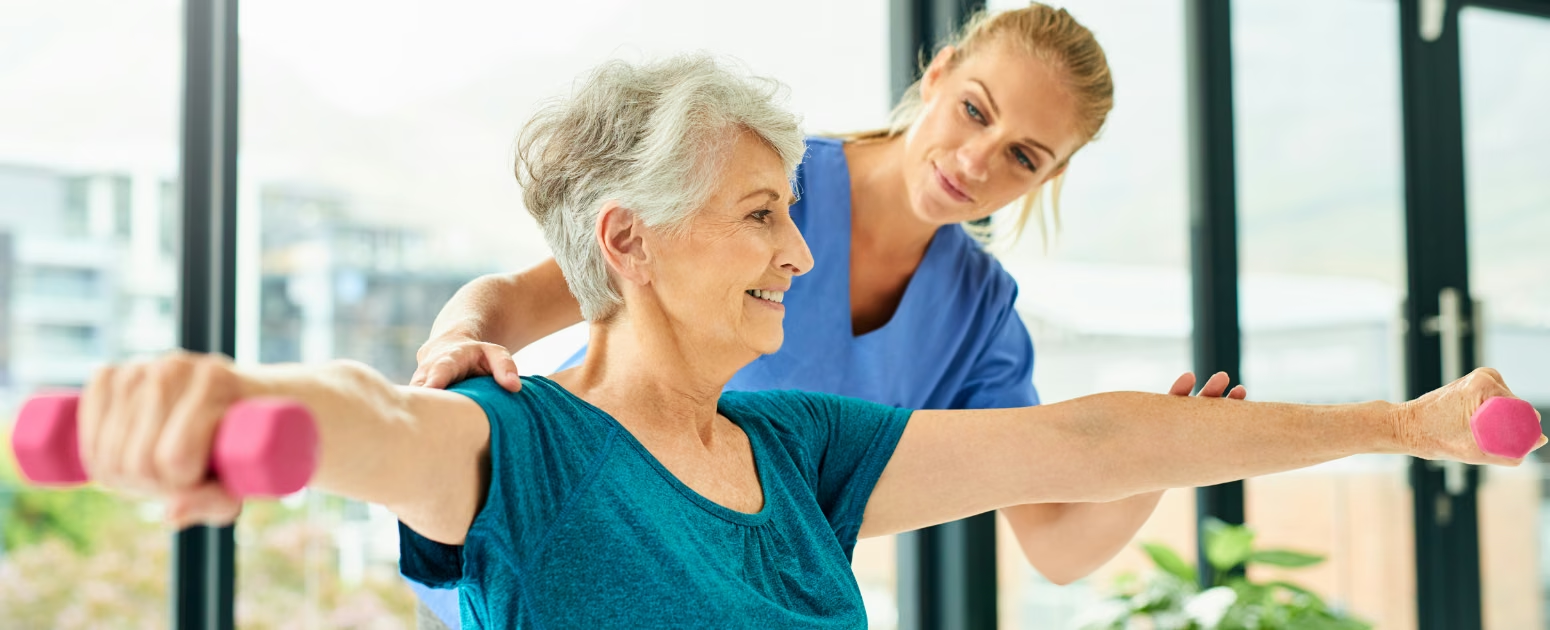
Weight-bearing and resistance exercise are the most effective non-pharmacological strategies for maintaining bone density after menopause. The IMS recommends a multi-component exercise plan combining aerobic activity, resistance training, flexibility work, and balance exercises.
High-intensity resistance and impact training is an evidence-based exercise program to strengthen bone and muscle. The program is especially designed for people with low bone mass. It should be supervised by a physiotherapist trained in the method. The LIFTMOR study, a randomized controlled trial published in the Journal of Bone and Mineral Research in 2018, confirmed that the program increases bone mass and improves muscle strength and physical function, with a small gain in height.
Mind-body movement is also strongly supported by evidence. A 2024 systematic review and meta-analysis (Xu et al., Menopause journal, 11 randomized controlled trials, 1,005 participants) found that Tai Chi, yoga, Pilates, qigong, and mindfulness-based movement significantly improved bone mineral density, sleep quality, anxiety, depression, and fatigue in perimenopausal and postmenopausal women. Three of those trials specifically studied Tai Chi and found reduced bone loss or meaningful increases in lumbar vertebrae BMD compared with control groups.
Balance training is recommended to reduce fall risk, and therefore the fracture risk that comes with a fall.

What Is the Stress-Bone Connection?
Chronic psychological stress is a mental health issue and also a bone health issue.
When the body is under sustained stress, elevated cortisol inhibits osteoblast activity and, via a signaling pathway called RANKL (Receptor Activator of Nuclear Factor Kappa-B Ligand), accelerates bone resorption. The WHI study (Follis et al., Journal of Epidemiology and Community Health, 2019; over 11,000 women) showed clearly that higher social stress was linked with significantly greater bone loss across every site measured over six years.
The IMS 2025 White Paper also identifies poor sleep (strongly driven by stress and anxiety) as associated with lower bone density and higher fracture risk. Mindfulness, relaxation techniques, and structured breathing practices are highlighted as evidence-based tools for reducing anxiety and improving sleep quality.
Managing stress is also part of caring for your bones: large-scale epidemiological evidence links stress with bone loss. It can be done through different practices, including mindfulness and hypnosis.
When Is Medication Needed?
Lifestyle optimization is the foundation, but pharmacological options are appropriate when needed, particularly for women with diagnosed osteoporosis or high fracture risk.
- Menopausal hormone therapy (MHT), the use of estrogen (with or without progesterone), is recommended by the UK's NOGG 2024 as a first-line option for women aged 60 or under with elevated fracture risk who are suitable candidates. Women over 60 who are already on MHT may continue it under appropriate medical guidance.
- NAMS 2021 guidelines support MHT for bone protection in recently postmenopausal women at elevated fracture risk after individual risk assessment.
- Bisphosphonates, denosumab, teriparatide and romosozumab are additional options; which is appropriate depends on your fracture risk category (low, high, or very high) and personal clinical factors.
Drug selection is always individualized. A specialist assessment, which looks beyond a single T-score reading, guides the right choice.
What Should Be on Your Bone Health Checklist?
✅ Ask your doctor for a DXA scan: recommended for all women 65 and older, and for any postmenopausal woman under 65 with risk factors.
✅ Use the FRAX tool with your doctor: a tool that estimates your personal 10-year fracture risk using multiple factors, including BMD.
✅ Aim for 1,000 to 1,200 mg calcium daily, from food first; discuss supplements with your doctor if needed.
✅ Ensure 400 to 800 IU vitamin D daily, especially important with limited sun exposure; confirm the right dose with your doctor.
✅ Follow a whole-food, plant-forward dietary pattern: vegetables, fruit, legumes, whole grains, nuts, seeds, oily fish.
✅ Do weight-bearing exercise at least 3 times per week: brisk walking, hiking, dancing.
✅ Add resistance training twice a week to build muscle and load your bones.
✅ Try Tai Chi, yoga, or qigong: evidence supports BMD benefits (Tai Chi) and symptom improvements.
✅ Build a daily stress-reduction practice to manage stress.
✅ Quit smoking and limit alcohol.
✅ Monitor your posture and height: unexplained height loss of more than 2 cm should be checked by a doctor.
When Should You See Your Doctor Promptly?
Do not wait for your next routine appointment if any of the following apply:
- You have had a fracture from a minor fall or bump after the age of 50
- You have unexplained back pain or notice a loss of height
- You have a parent who fractured a hip
- You went through menopause before age 45
- You have been taking corticosteroids (such as prednisolone) for more than three months
- You have rheumatoid arthritis, celiac disease, or inflammatory bowel disease
Catching bone loss early changes outcomes dramatically. The conversation is worth having.
What Is the Most Important Thing to Know?
The perimenopausal years are your biggest window of opportunity. Bone loss is fastest in the three years around your final period, but that also means the three years when intervention makes the most difference. The bone you protect now is the bone that carries you through your 60s, 70s, and beyond.
Frequently Asked Questions


Ready To Take The Next Step?




EverCalm only uses high-quality sources, including peer-reviewed articles, to support the facts within our articles. Experts review all our articles to ensure our content is accurate, helpful, and trustworthy.
- The North American Menopause Society (now The Menopause Society), 2021. Position statement on managing osteoporosis after menopause. Menopause. Publication
- Sarafrazi and colleagues, 2021. How many US adults over 50 have osteoporosis or low bone mass. NCHS Data Brief (CDC). Publication
- Greendale and colleagues, 2012. The SWAN study of bone loss around the final menstrual period. Journal of Bone and Mineral Research. Publication
- National Osteoporosis Guideline Group (Gregson and colleagues), 2025. The 2024 UK guideline on preventing and treating osteoporosis. Archives of Osteoporosis. Publication
- Anekwe and colleagues, 2025. The International Menopause Society White Paper on lifestyle medicine in menopause. Climacteric. Publication